What it does
TST builds a digital chain of custody for tax-stamped bottles. At the labelling area, the system links the QR code applied to the bottle cap with the bottle's tax-stamp Data Matrix. Downstream readers then roll those bottle identities into the case barcode and finally into the pallet record, so a finished pallet can be traced back to the individual tax stamps it contains.
In the line
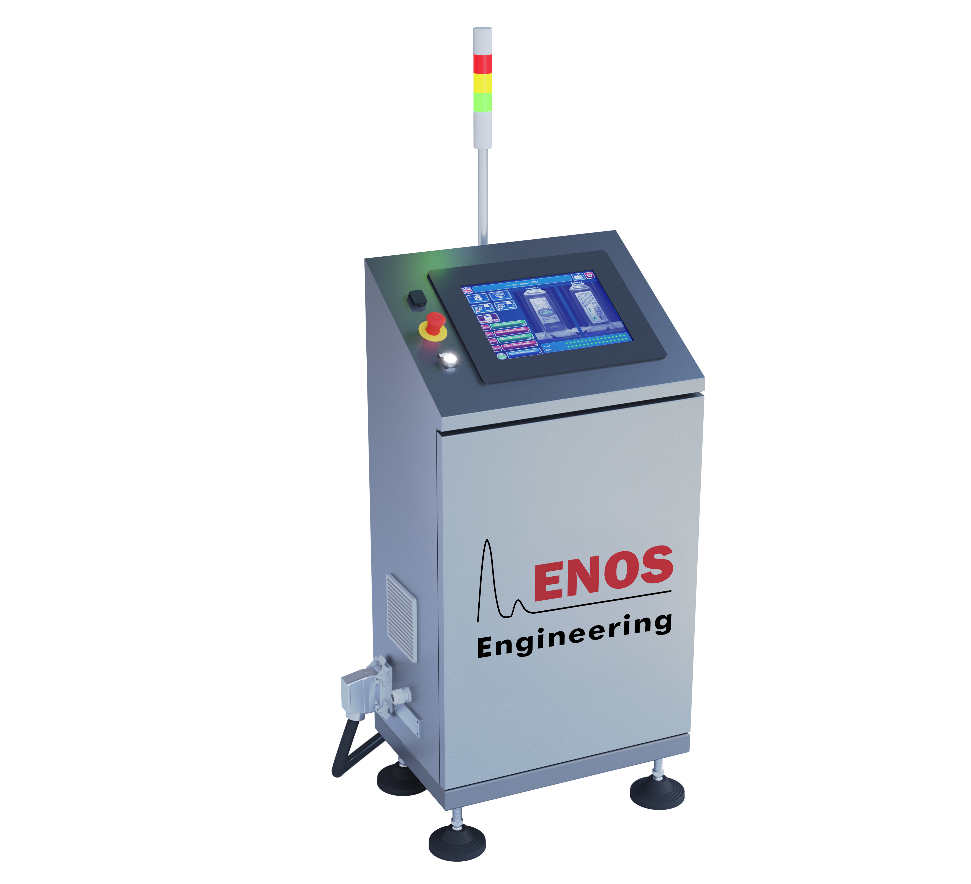
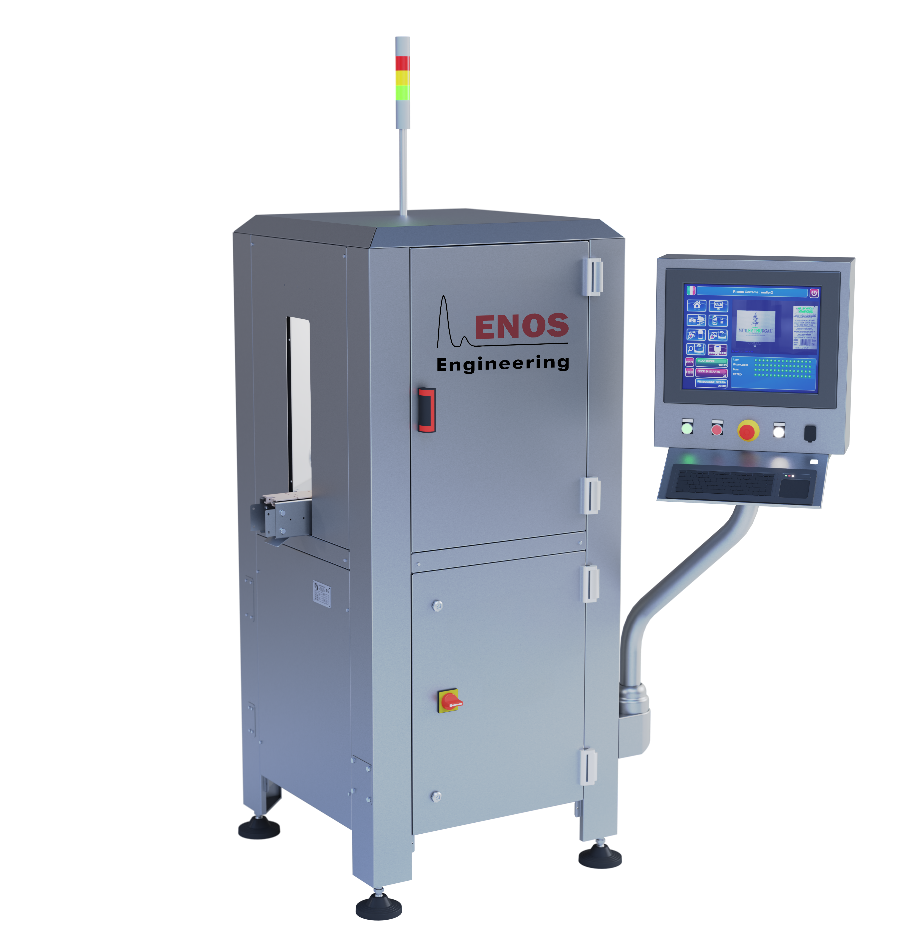
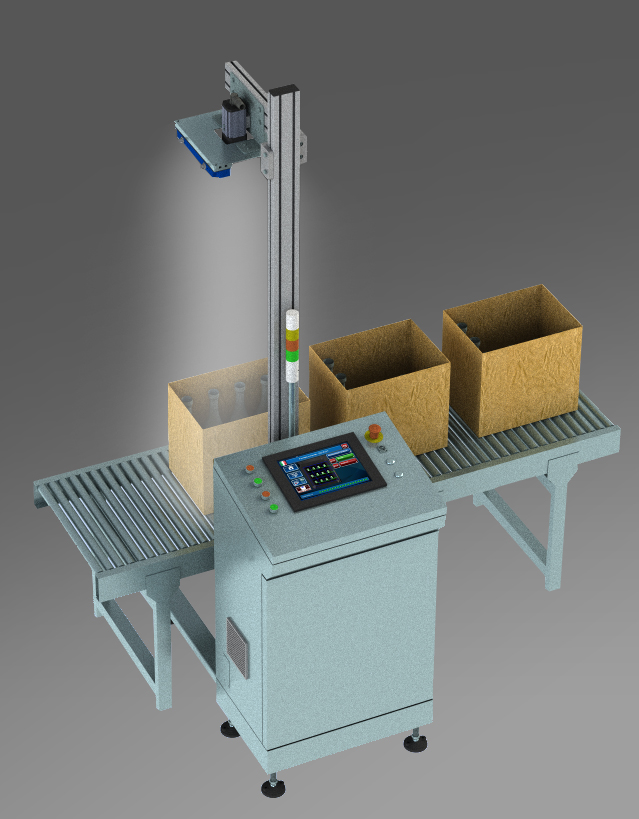
The system is arranged as a set of read points across labelling, packing and palletizing. Each point captures the codes needed at that stage and passes them into the traceability record. Like ENOS label and code inspection systems, it uses automatic code reading, stored production formats and networked data handling rather than manual reconciliation.
What it tracks
- Per-bottle QR code applied before labelling.
- Tax-stamp Data Matrix read and paired to the bottle QR.
- Every bottle QR inside the packed case.
- Unique case barcode representing the bottles inside that case.
- Case barcodes that make up the finished pallet.
- XML export listing the pallet's tax-stamp contents.
How it works
- Before labelling, a unique QR code is applied to each bottle cap.
- A first reader scans that QR code and registers the bottle in the traceability record.
- A second reader scans the bottle's tax-stamp Data Matrix and links it to that same bottle.
- After packing, the case station reads every QR in the box and gives the case its own code.
- At palletizing, a final reader records which cases make up each pallet.
- The system then produces a pallet report listing every tax stamp it contains.
What you get
Producers get a searchable parent-child record from bottle to case to pallet. That lets a single bottle or tax stamp be located in the supply chain while supporting fiscal compliance, transparency and product-security controls.