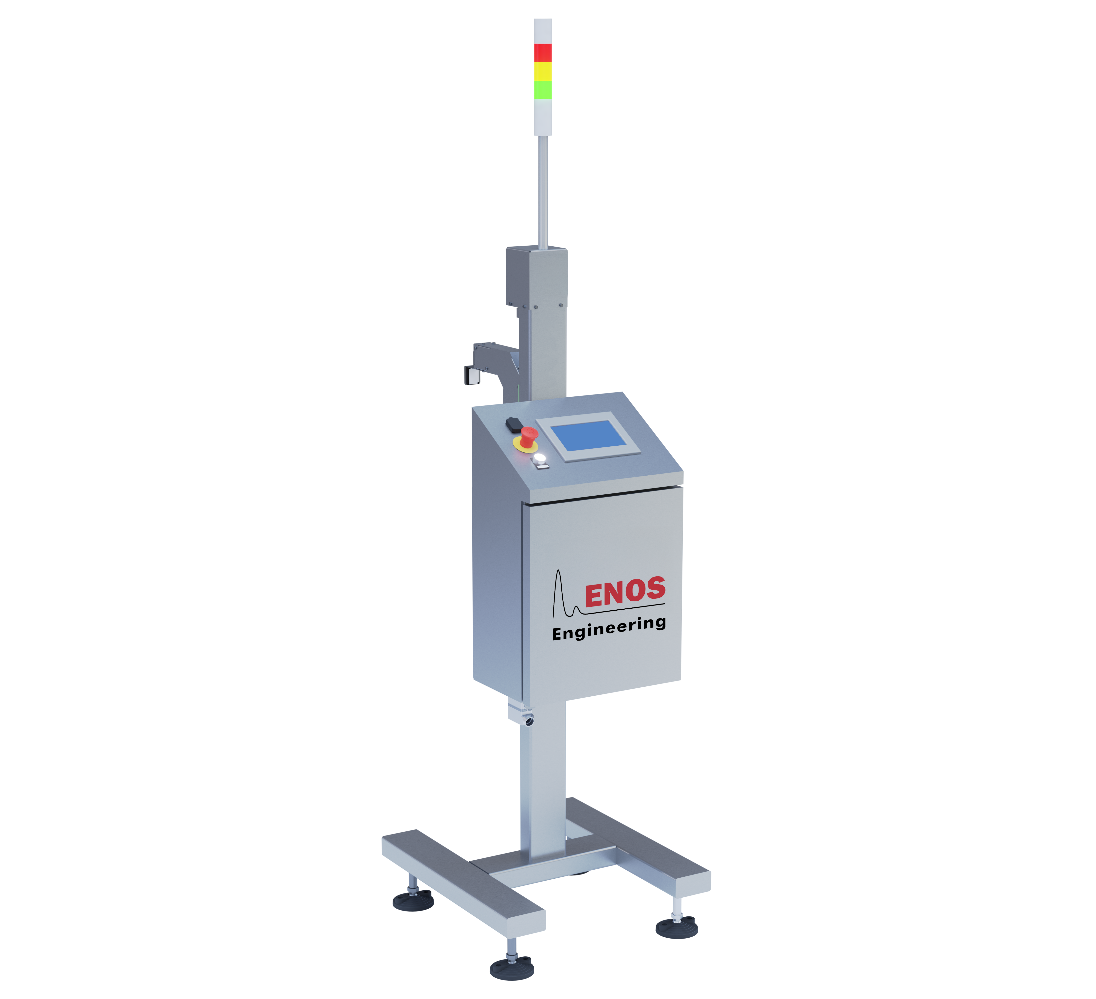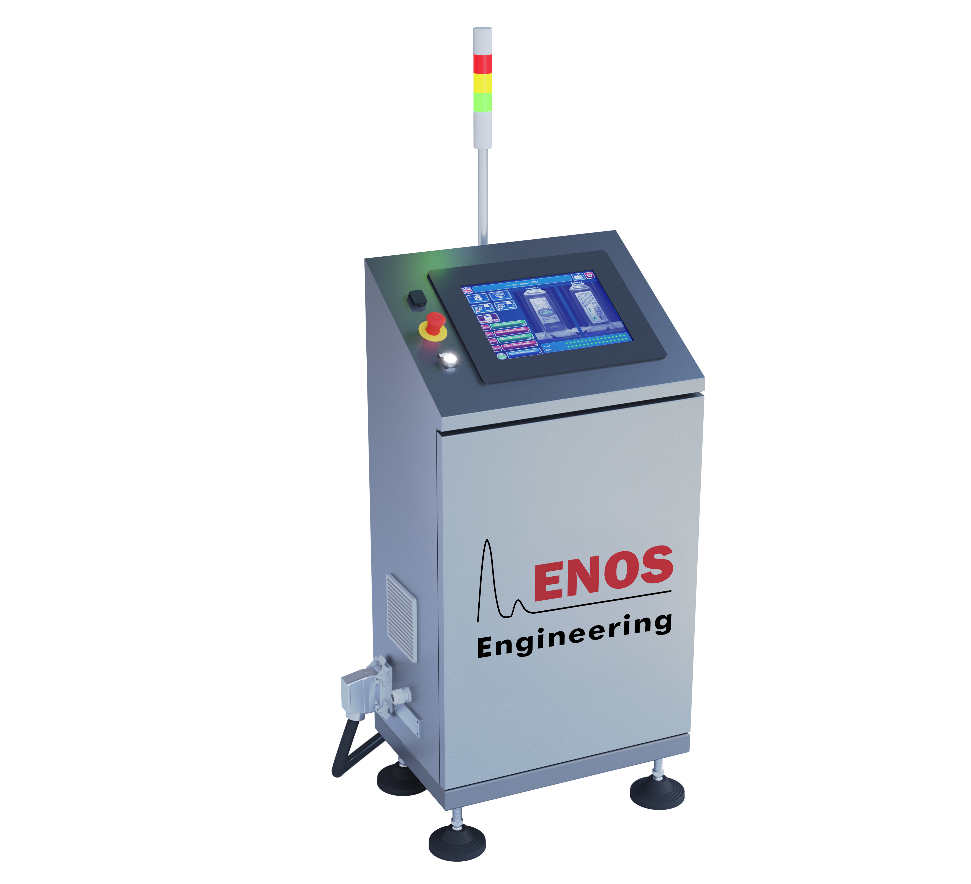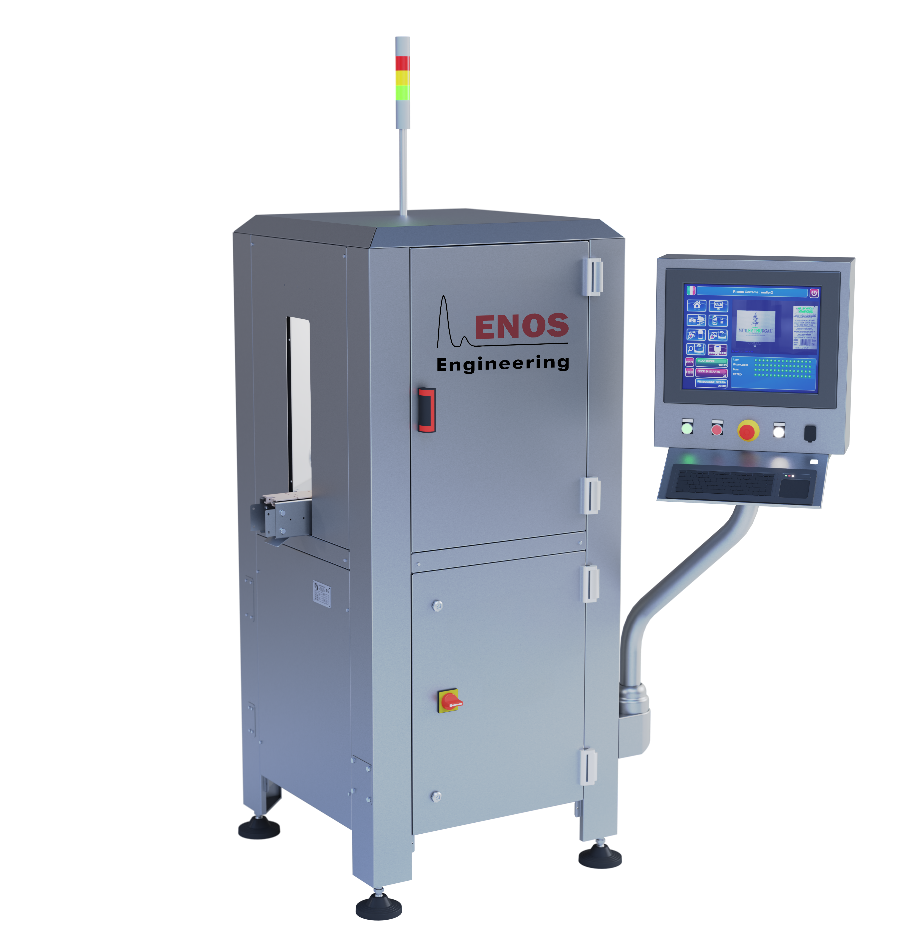
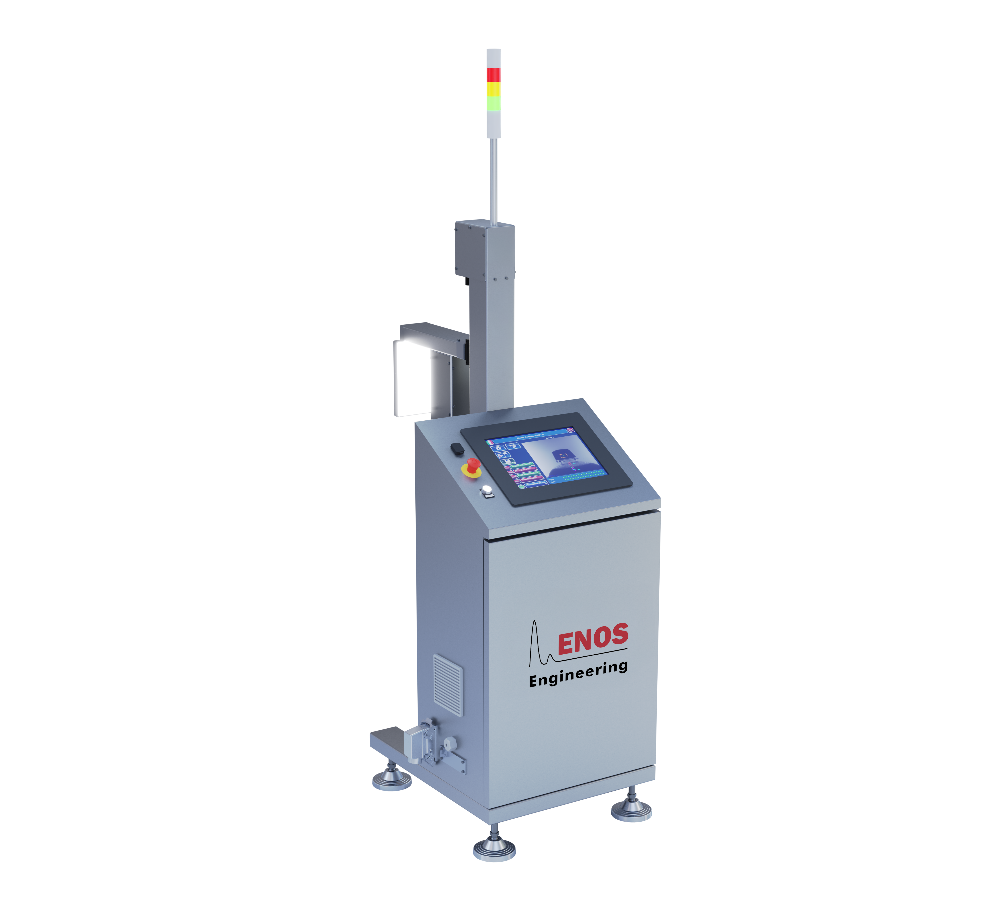
What it does
The vision system checks each filled container against the active format, measuring whether the fill level stays within the stored minimum and maximum limits and inspecting the closure at the same station. It is built for glass, PET and HDPE containers of different shapes and colors, with format recipes saved for repeatable changeovers.
In the line
The station sits on the full-bottle line after filling and closure. Operators manage production statistics, saved recipes and format changes from the touchscreen. The full CMTL NT (ENOS's cap-and-level inspection model) uses a motorized reading head for automatic changeover, with network access for remote service; the compact CMFL SMART version is a single-camera fill-level station that can be added to existing lines.
What it inspects
- Fill level against minimum and maximum recipe limits.
- Presence and position of cork closures.
- Closure of STELVIN threaded caps.
- Integrity of the tamper-evident guarantee ring.
- Liquid level detection and cap-presence control on CMFL SMART.
- Optical and acoustic alarms for nonconforming bottles.
- Consecutive-reject limit that can signal upstream or downstream machines to stop.
Models and options
- CMTL 515 NT CMTL NT model for 5,000 to 15,000 bottles per hour, with fill-level and cap inspection.
- CMTL 1540 NT CMTL NT model for lines up to 40,000 bottles per hour.
- CMFL SMART Single smart-camera fill-level inspector for 5,000 to 15,000 bottles per hour, with cap-presence control and optional reject mechanism.
- Vacuum inspection Optional vacuum-inspection system for closure integrity checks where the application requires it.
- Reject system Optional reject mechanism for routing bottles that fall outside the configured level or closure limits into the reject container.
- Threaded-cap module Optional module for screw-cap inspection, including threaded closures such as STELVIN.